OEE software for pharmaceutical manufacturing
In a validated environment, the hard part of measuring OEE is touching nothing you would have to revalidate. Yieldly measures from outside the machine on a standard signal, so it sits alongside validated equipment without modifying the control system - giving you batch-level OEE, changeover visibility and an audit trail, live in a day.
Pharmaceutical lines carry constraints most factories do not: equipment is validated, changes are controlled, and the downtime is dominated by changeovers and the cleaning between batches. Deviations are expensive, so the pressure is to run validated equipment as effectively as possible - but the usual ways of getting OEE data mean modifying the control system, which means revalidation.
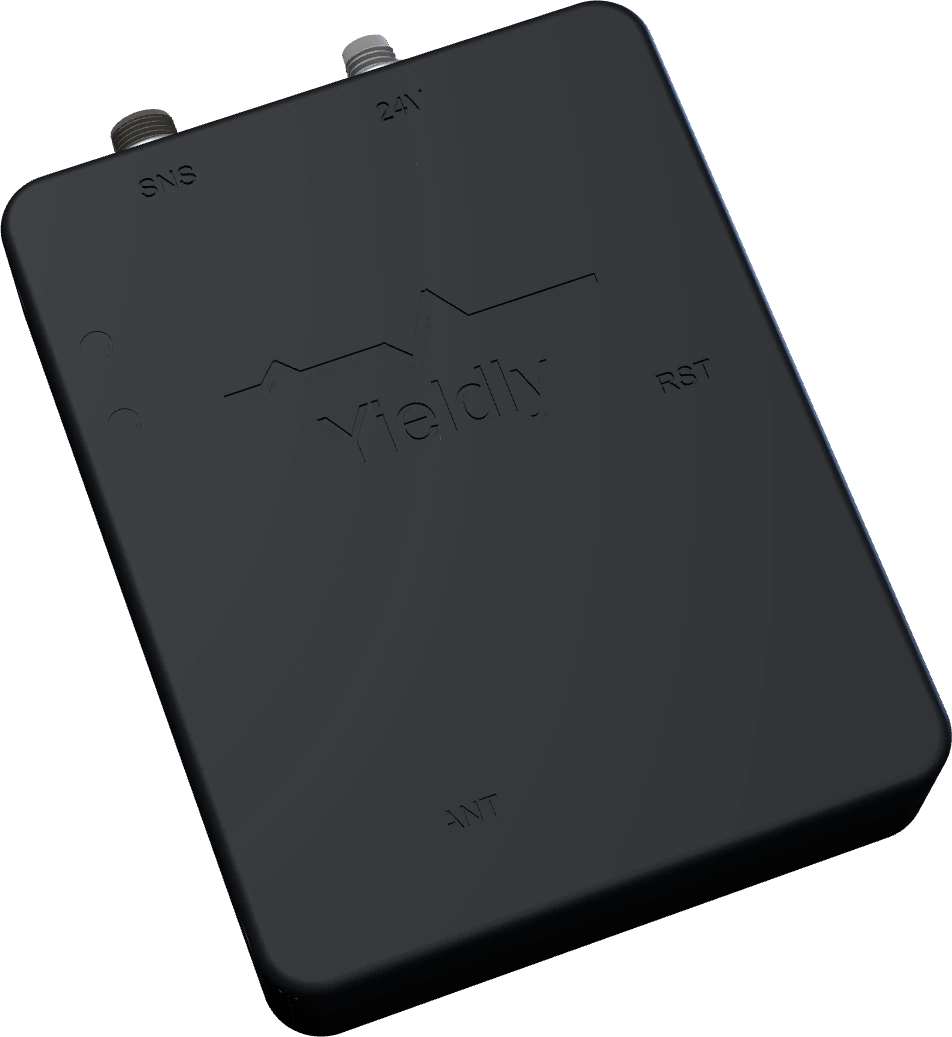
Yieldly sidesteps that entirely. The sensor measures real output from outside the machine on a standard industrial signal, so it never touches the validated control system and there is nothing to revalidate to start measuring. You get OEE per batch and per changeover, every stop captured with a reason, and an audit log of who did what and when.
Where pharmaceutical lines lose their output
The same gap shows up on most lines - capacity you already pay for, lost to stops, slow running and rejects you cannot see.
You cannot modify validated equipment
Tapping a validated control system for data triggers change control and revalidation. A measurement method that touches nothing avoids that cost entirely.
Changeover and cleaning dominate downtime
Setup, changeover and the cleaning between batches are the largest availability losses. Until each is measured per batch, you cannot tell where the time really goes.
Deviations and rejects are costly
Yield and quality losses carry a high price per unit. Tracking good output against total makes those losses visible next to availability and performance.
The data has to be trustworthy
Numbers used in a regulated setting need a clear trail. Manual, reconstructed logs do not provide one; automatic capture with an audit record does.
Measure it the same day, without touching the machine
A plug-in sensor that counts real output from outside the machine, so you see the losses that matter here and can act on them.
Never touches validated equipment
The sensor measures from outside the machine on a standard signal, so it sits alongside validated equipment with no modification to the control system and nothing to revalidate.
OEE per batch and changeover
See effectiveness and losses for each batch and each changeover, so the cleaning and setup time between batches is measured rather than estimated.
Every action on an audit trail
Stops are captured automatically and classified with a reason, and an audit log records who did what and when - so the data has a clear, reviewable trail.
Live in a day, plant-wide
Identical sensors across packaging and production lines give one comparable OEE per line and a plant rollup, without an integration project.
OEE for pharmaceutical, answered
Does it touch our validated equipment or control system?
No. The sensor measures real output from outside the machine on a standard industrial signal and reports over its own link. It never connects to or modifies the validated control system, so there is nothing to revalidate in order to start measuring OEE.
Can it measure OEE per batch and per changeover?
Yes. OEE and losses can be viewed per batch and per changeover, so the setup and cleaning time between batches - usually the largest availability loss in pharma - is measured rather than estimated.
Is there an audit trail of the data?
Stops are detected automatically and classified with a reason, and an audit log records user actions - who did what, and when - so the OEE data has a clear, reviewable trail rather than being reconstructed from memory at the end of a shift.
How quickly can we start measuring?
Because nothing connects to the validated control system, a line is typically live the same day: mount the sensor, claim it in the app, and output becomes live OEE in minutes.
Keep reading
- What is OEE?OEE explained simply: the availability × performance × quality formula, a worked example, what a good score is, and how to improve it.Read guide
- The Six Big LossesThe Six Big Losses map every production loss to OEE's three factors. Learn what each one is, how to spot it, and where to attack first.Read guide
- What is a good OEE score?What counts as a good OEE? World-class is 85%, typical discrete manufacturing is ~60%. Here's how to read your score honestly and improve it.Read guide
See your real OEE on your pharmaceutical lines.
Book a 30-minute demo and we'll show live OEE, automatic stop capture and reporting on a line like yours.