OEE software for packaging and converting lines
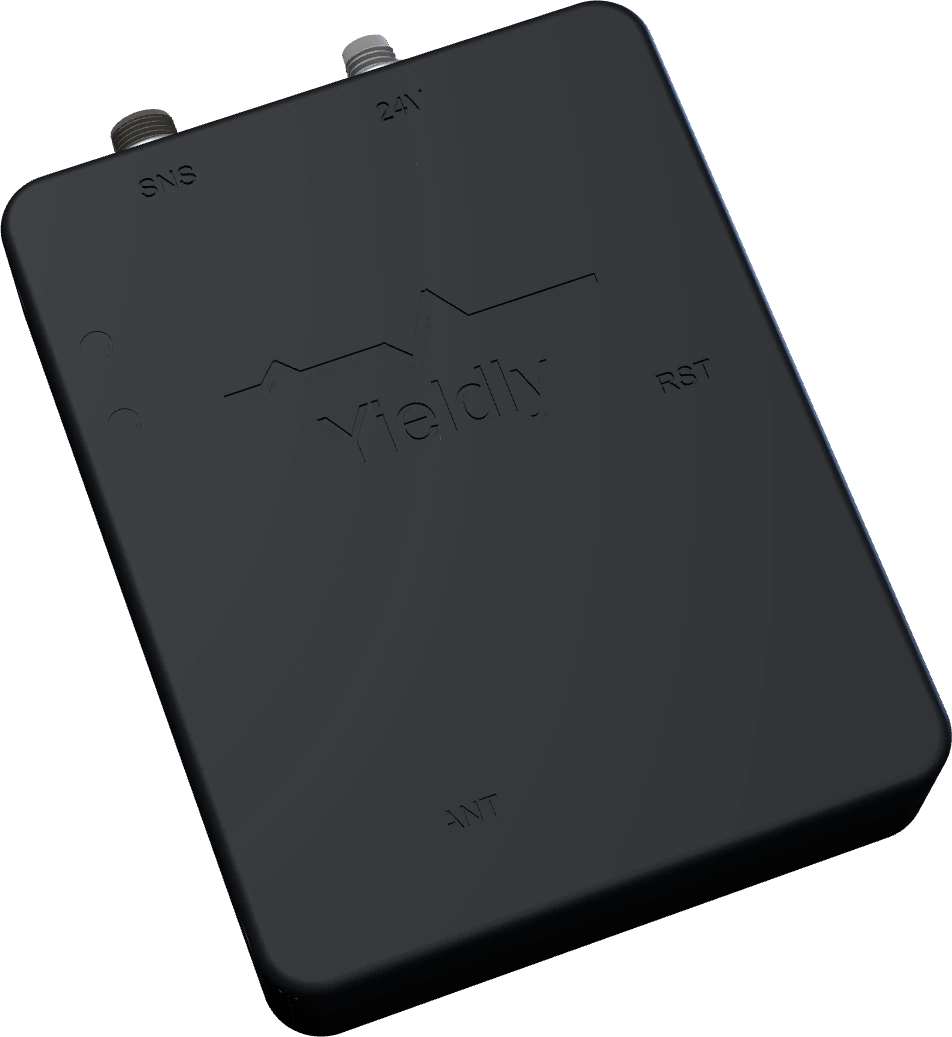
A packaging line is only as fast as its slowest machine, and a single jam ripples out as blocking and starvation everywhere around it. Yieldly clips a sensor onto each station and measures real OEE the same day, so you can see the bottleneck, catch the micro-stops, and stop guessing where the line actually loses its output.
Packaging and converting lines are serial: cartoner, case packer, palletiser, wrapper, one feeding the next. When any machine stops, the ones upstream back up and the ones downstream starve, so the whole line loses output even though only one station failed. The losses are dominated by short, frequent stops and jams, plus format changeovers - exactly the things that are too quick to log by hand and so never get fixed.
Yieldly counts the real output of every station from a sensor mounted on the outside, with no PLC integration. That makes the bottleneck obvious, turns each jam and micro-stop into data you can rank, and measures every changeover - so the few causes behind most of your downtime jump straight out.
Where packaging lines lose their output
The same gap shows up on most lines - capacity you already pay for, lost to stops, slow running and rejects you cannot see.
Blocking and starvation hide the real loss
When one machine stops, others back up or run dry - so the loss shows up far from its cause. Measuring every station at once reveals which machine is actually pacing the line.
Jams and micro-stops dominate
Most packaging downtime is many short stops, not a few long ones. Cleared in seconds and never logged, they are the single biggest hidden drain on throughput.
Frequent format changeovers
Size and format changes are a constant on packaging lines. Until each one is measured, you cannot tell which changeovers are worth the effort to speed up.
Material and film waste
Misfeeds, web breaks and reject packs are quality and yield losses. Tracking good output against total puts a real number on the waste alongside the downtime.
Measure it the same day, without touching the machine
A plug-in sensor that counts real output from outside the machine, so you see the losses that matter here and can act on them.
Finds the bottleneck automatically
Measure every station and the line's true constraint becomes obvious - so you fix the machine that is actually capping output, not the one that looks busiest.
Counts every jam and micro-stop
It counts each unit directly, so the short, frequent stops that manual logs miss are captured, ranked by cost, and finally fixable.
Sees the whole line flow
Watch how a single stop blocks upstream and starves downstream, so you can size buffers and target the constraint instead of chasing symptoms.
No control-system project
The sensor mounts on the outside and reports over its own link, never your control network - so a line goes live in a day with no integration and no IT change.
OEE for packaging, answered
How does OEE help on a packaging line?
Packaging lines are serial, so a stop on one machine causes blocking and starvation on the others. Measuring OEE on every station at once shows which machine is the true bottleneck and turns the short, frequent jams that dominate packaging downtime into ranked, fixable data.
Can it find the bottleneck across several machines?
Yes. With a sensor on each station you can see the real constraint - the machine pacing the whole line - and watch how its stops ripple outward as blocking and starvation, rather than guessing from the machine that happens to look busiest.
Does it need PLC or control-system integration?
No. Each sensor counts output from outside the machine and reports over its own Wi-Fi or cellular link, so there is no PLC project, no OPC-UA and no change to your control network. A line is typically live the same day.
Can it measure changeover time?
Yes. Format and size changeovers are detected and logged with a reason, so each one is measured and ranked - which tells you which changeovers are worth speeding up with a method like SMED.
Keep reading
- The Six Big LossesThe Six Big Losses map every production loss to OEE's three factors. Learn what each one is, how to spot it, and where to attack first.Read guide
- How to reduce unplanned downtimeA practical playbook to cut unplanned downtime: measure every stop, find the vital few causes with Pareto, and run improvement against live data.Read guide
- What is OEE?OEE explained simply: the availability × performance × quality formula, a worked example, what a good score is, and how to improve it.Read guide
See your real OEE on your packaging lines.
Book a 30-minute demo and we'll show live OEE, automatic stop capture and reporting on a line like yours.