OEE software for food & beverage manufacturing
High-speed filling, capping and packaging lines lose most of their output to stops too short to write down by hand. Yieldly clips onto the machine and measures real OEE the same day - no PLC project, no line stoppage - so the micro-stops, changeovers and speed losses that quietly cap your throughput finally become visible.
Food and beverage lines run fast and change often. A two-second jam on a filler doing hundreds of units a minute never reaches a clipboard, yet repeated across a shift it can erase ten to fifteen points of performance. Frequent flavour and format changes, plus cleaning and sanitation, take another large bite out of availability. The result is the familiar gap: a line that is paid for around the clock but only turns a fraction of that time into saleable product.
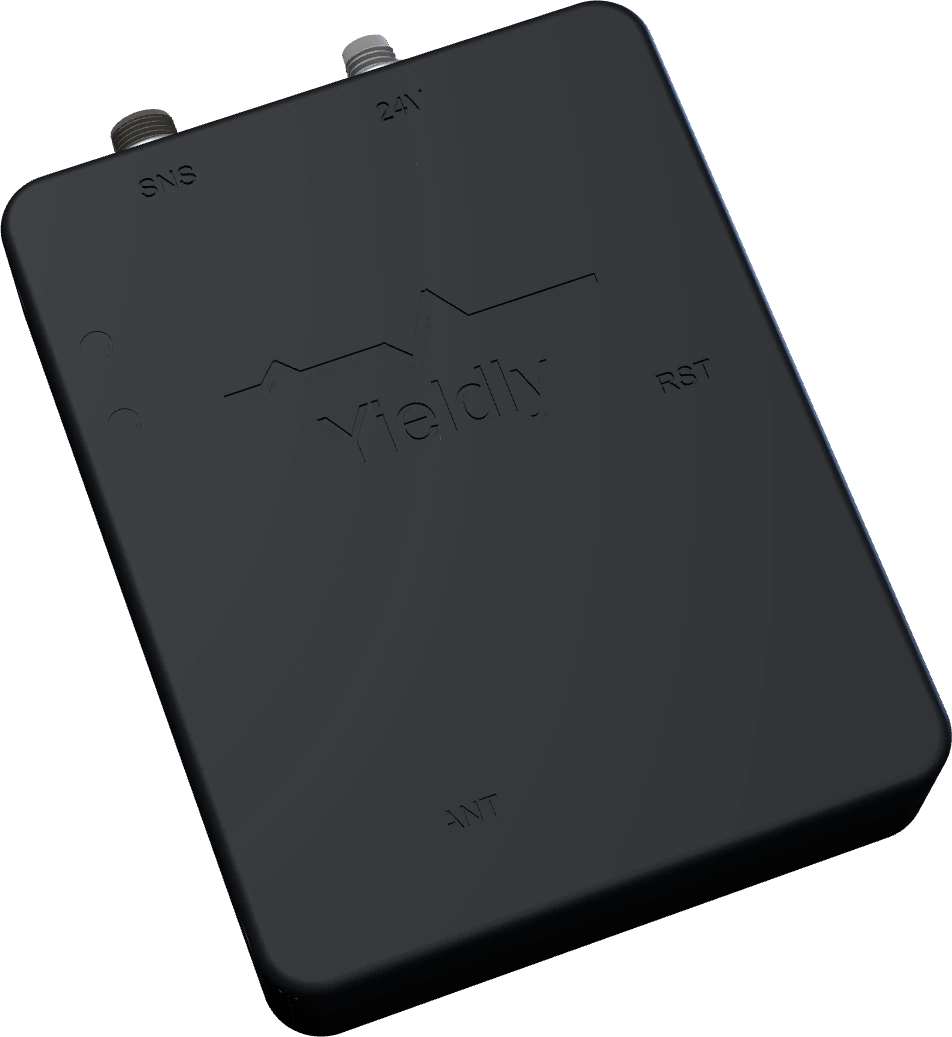
Yieldly measures every unit the line makes directly, from a sensor mounted outside the machine. Because it never touches product or the control system, it drops onto a wet, washdown line with no hygiene or IT review - and because it counts automatically, the short stops and speed losses that manual logs miss show up where you can act on them.
Where food & beverage lines lose their output
The same gap shows up on most lines - capacity you already pay for, lost to stops, slow running and rejects you cannot see.
Micro-stops hide in the average
On a line running hundreds of units a minute, a brief jam every few minutes never gets logged - but it can quietly cost ten to fifteen points of performance. Automatic counting catches every one.
Changeovers and cleaning eat availability
Flavour and format changes, plus CIP and sanitation, are a big share of downtime. Measure each one with a reason so you know exactly where faster changeovers pay back.
Many SKUs, short runs
Constant changeovers and short runs make manual OEE tracking impossible to keep up with. A sensor that counts on its own keeps the data honest across every product.
Scrap, rework and giveaway
Rejects, rework and overfill are quality and yield losses. Tracking good output against total output puts a number on them, right beside availability and performance.
Measure it the same day, without touching the machine
A plug-in sensor that counts real output from outside the machine, so you see the losses that matter here and can act on them.
Non-invasive and washdown-friendly
The sensor mounts outside the machine on a standard signal or dry contact, so it never touches product or the controls. Drop it on a hygienic line with no validation, no IT ticket and no downtime.
Catches every micro-stop and speed loss
It counts each unit directly, so the short stops and slow running that manual logs never see become visible - and rankable by how much they actually cost.
Changeover and CIP, measured not guessed
Every stop is captured with a reason, so changeover and cleaning time is measured and improvable. Pair it with the SMED method to attack the longest ones first.
One number across the whole plant
Identical sensors on filler, capper, labeller and packer give one comparable OEE per line and a clean plant rollup - live the same day they go on.
OEE for food & beverage, answered
How is OEE used in food and beverage manufacturing?
OEE measures how much of your scheduled production time turns into good, saleable product, broken into availability, performance and quality. In food and beverage it is especially useful for exposing the micro-stops and speed losses on high-speed lines and the downtime from frequent changeovers and cleaning - the losses that manual logs almost always miss.
Can it measure changeover and cleaning (CIP) downtime?
Yes. Every stop is detected automatically and classified with a reason, so changeover, cleaning and sanitation time is measured and ranked rather than estimated. That tells you which changeovers cost the most and where faster setups would pay back.
Will it work on a high-speed filling or packaging line?
Yes. The sensor captures fast cycles cleanly, so brief jams and slow running show up in the data instead of disappearing into the average. That is exactly where most of the hidden output on a fast line is lost.
Is it safe for a hygienic or washdown environment?
The sensor measures from outside the machine on a standard industrial signal and never touches product or the control system, so it can go on a wet, washdown line without a hygiene review or any change to your equipment.
Keep reading
- What is OEE?OEE explained simply: the availability × performance × quality formula, a worked example, what a good score is, and how to improve it.Read guide
- The Six Big LossesThe Six Big Losses map every production loss to OEE's three factors. Learn what each one is, how to spot it, and where to attack first.Read guide
- How to reduce changeover time (SMED)SMED cuts changeover time by converting internal setup steps to external ones. Learn the method, the quick wins, and how changeover hits OEE.Read guide
See your real OEE on your food & beverage lines.
Book a 30-minute demo and we'll show live OEE, automatic stop capture and reporting on a line like yours.